

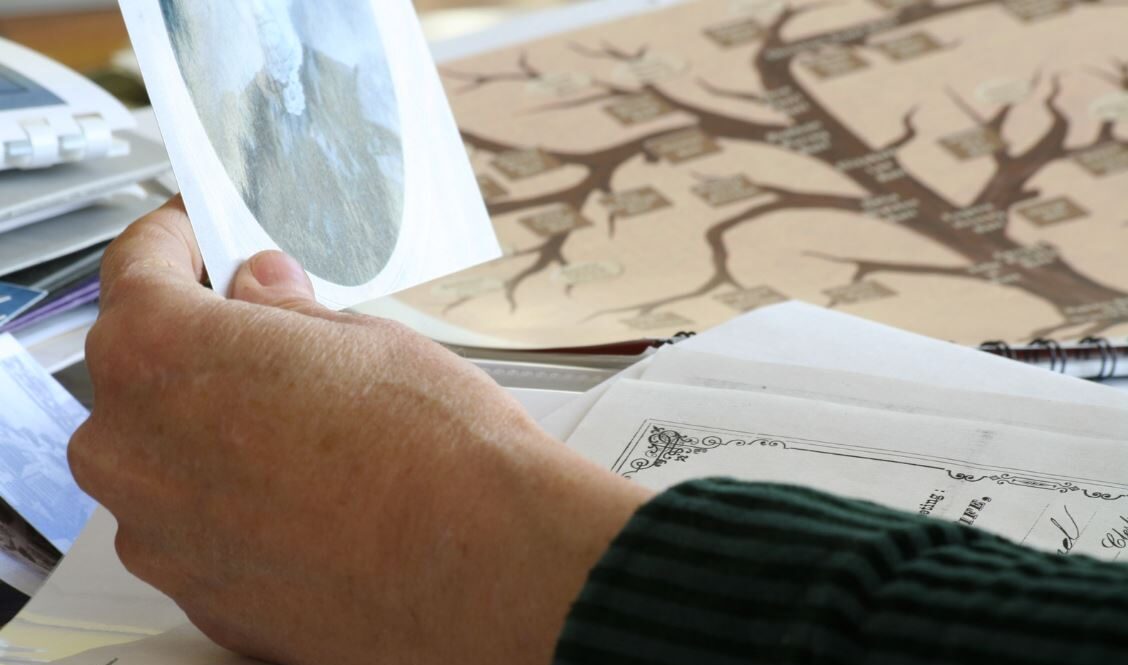
Ancestor Connection
Connecting with ancestors can mean very different things: researching family history, preserving stories, honoring deceased relatives, or practicing a spiritual tradition that includes ancestor work. Genealogy can uncover evidence about the past; spirit communication remains a belief-based interpretation.
Start With What Can Be Known
- Names, dates and places from family records.
- Photographs and letters.
- Stories from living relatives.
- Public records and family trees.
- Recipes, objects, languages and traditions.
You Do Not Need a Complete Family Tree
Many people have gaps because of adoption, migration, lost records, family conflict or historical injustice. A meaningful practice does not require proving every branch of your ancestry.
Separate Genealogy From Spiritual Interpretation
Documents, records and evidence about people who lived.
Stories and traditions preserved by family or community.
Rituals or impressions interpreted as ancestor connection.
You Can Set Boundaries With Family History
Honoring ancestry does not require idealizing every ancestor. Historical relatives may have made choices or held beliefs you reject. You can study the past honestly while choosing which values you carry forward.
Simple Ancestor-Remembrance Practices
- Display a photograph or meaningful object.
- Cook a family recipe.
- Write down a story before it is lost.
- Visit a meaningful place or cemetery respectfully.
- Create a private memorial or gratitude ritual.
- Donate or volunteer in someone’s memory.
What About Tarot, Candles or Meditation?
Some people use divination or meditation as part of spiritual ancestor work. Treat any message as personal interpretation rather than verified communication. Candle use should follow ordinary fire safety.
Respect Cultural and Religious Context
Ancestor practices can belong to living religious and cultural traditions. Learn the context before borrowing rituals, sacred language or ceremonial objects from communities that are not your own.
If Ancestor Work Feels Frightening
You do not have to continue a spiritual practice that makes you feel unsafe or overwhelmed. If you experience threatening, commanding or disruptive voices or visions, seek appropriate professional support rather than assuming an ancestor is demanding contact.
You Can Honor the Past Without Giving It Control of the Present
Ancestor work can support identity and reflection, but your current values and choices remain yours.
Related Guides
Frequently Asked Questions
1. What is ancestor work?
It can mean genealogy, remembrance or spiritual practices focused on deceased family members.
2. Do I need to know my full family tree?
No.
3. Can adopted people do ancestor work?
Yes; the practice can be defined in ways that fit the information and relationships available to you.
4. Does genealogy prove spirit contact?
No.
5. Can I honor ancestors I never met?
Yes, through research, remembrance or personal ritual.
6. Do I have to honor every ancestor?
No.
7. Can I reject harmful family values?
Yes.
8. Can I use tarot to contact ancestors?
Some people do spiritually, but messages should not be treated as verified facts.
9. Can I light a candle?
Yes, with ordinary fire safety.
10. What if I have no records?
Start with what is known and avoid inventing certainty.
11. Can family stories be inaccurate?
Yes; oral histories can change over generations.
12. Should I copy another culture’s ancestor ritual?
Learn the cultural context and respect community boundaries first.
13. What is a practical ancestor activity?
Preserve names, photographs, recipes or stories.
14. What if spiritual experiences become frightening?
Pause the practice and seek appropriate support if needed.
15. What is the goal?
Connection, understanding and reflection—not proving supernatural claims.