

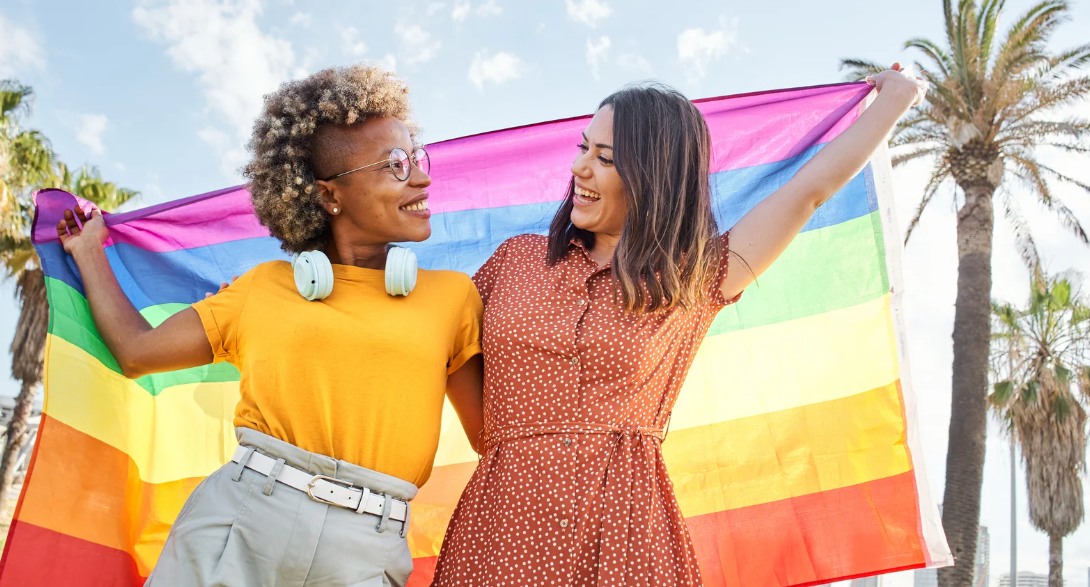
Relationship Skills & Resilience
There is no single “LGBTQ+ relationship model.” Lesbian, gay, bisexual, transgender, queer and other LGBTQ+ people have diverse lives, cultures and relationship structures. Still, research on same-sex couples and minority stress highlights useful relationship themes: authenticity, negotiated roles, community support, resilience and the importance of protecting a relationship from outside stigma.
Healthy Love Is Not Defined by Orientation
The core ingredients of healthy relationships are broadly similar across orientations: respect, consent, communication, reliability, boundaries, emotional safety and repair after conflict. What may differ is the social context. Some LGBTQ+ couples face discrimination, pressure around disclosure, lack of family support or assumptions that heterosexual gender roles should apply to them.
Research reviewed in PubMed describes how minority stress can affect same-sex couples. An American Psychological Association research summary likewise discusses how sexual minority stress can spill over into relationship functioning. Those findings are more useful than treating LGBTQ+ couples as either uniquely troubled or uniquely enlightened.
Being known without having to perform a role.
Roles are negotiated rather than assumed.
Chosen family and social support can matter deeply.
External stress can be faced without romanticizing hardship.
1. Healthy Roles Are Negotiated, Not Assigned
Relationships work better when partners discuss who handles money, household work, emotional labor, caregiving and planning instead of assuming one person should do those things because of gender. LGBTQ+ couples are not automatically free of unequal dynamics, but the absence of a default heterosexual script can make role negotiation more visible.
2. Authenticity Matters, but Safety Matters Too
Being able to live openly can support closeness and self-respect. At the same time, disclosure is personal and can have real consequences depending on family, culture, workplace or location. “Be yourself” should never become pressure to come out before someone feels ready or safe.
If you are changing your personality to keep a relationship, see How to Feel Loved Without Changing Who You Are.
3. Outside Stress Can Become Inside Stress
Discrimination or lack of acceptance can affect mood, trust and relationship satisfaction. That does not mean the relationship itself is unhealthy. Couples can benefit from naming the source accurately: “We are under pressure” is different from “We are wrong for each other.”
4. Chosen Family Can Be a Real Source of Support
For some LGBTQ+ people, close friends and community members become chosen family, especially when relatives are unavailable or rejecting. A strong support network can reduce the pressure for one romantic partner to be someone’s only emotional resource.
Our guide to Friendship Psychic Readings Beyond Romance includes a practical friendship-health checklist alongside spiritual reflection.
5. Equality Requires More Than Good Intentions
Equality means both people can influence decisions, express needs and set boundaries. It also means neither person uses money, identity, social connections, sex or housing as leverage. A relationship can look equal publicly while still being controlling privately.
6. Communication Should Not Depend on Mind-Reading
No orientation makes partners automatically better communicators. Healthy communication still requires asking, listening, clarifying and tolerating some discomfort. If one person says “I’m fine,” do not assume their gender or orientation reveals a hidden translation. Context and behavior matter more. See When “I’m Fine” Creates Confusion for a behavior-based approach.
7. Resilience Is Valuable, but Hardship Should Not Be Romanticized
LGBTQ+ communities have often built resilience through stigma and exclusion. That strength is real, but people should not have to suffer in order to prove that a relationship is meaningful. Enduring discrimination is not a requirement for “stronger love.”
8. Boundaries Protect Love
The phrase “love has no boundaries” sounds romantic, but healthy love does need boundaries. Consent, privacy, independence, friendships, money, time and physical space all require respect. A partner who repeatedly ignores those limits is not demonstrating deeper love.
9. Identity Should Never Be Used as a Weapon
Threatening to out a partner, mocking their identity, controlling how they present themselves or telling them no one else will accept them are serious warning signs. Those behaviors are about control, not relationship orientation.
For a detailed safety-focused guide, see Leaving a Toxic Gay Relationship: Signs, Safety & Support.
10. Healthy Relationships Make Room for Difference
Partners can differ in gender expression, politics, religion, social needs, family relationships, libido or how publicly they live. Compatibility does not require sameness. It requires enough respect, flexibility and shared values to manage differences without erasing either person.
11. Community Celebration Can Strengthen Belonging
Celebrating anniversaries, milestones, Pride events or everyday affection can reinforce belonging—especially for people whose relationships were previously hidden or invalidated. Celebration is healthiest when it is chosen, not when people feel pressured to perform visibility.
12. Help-Seeking Is a Relationship Strength
Affirming therapy, trusted community, friends or other qualified support can help when external stress or relationship conflict becomes difficult to manage. Seeking help is not evidence that a relationship has failed.
Healthy Love, Regardless of Orientation
Ask the same core questions in every relationship:
- Can both people say no safely?
- Do actions generally match promises?
- Are differences treated with respect?
- Can conflict be repaired?
- Does each person keep agency, friendships and identity?
- Can both partners ask for support without shame?
Spirituality and LGBTQ+ Relationships
Some LGBTQ+ people use astrology, tarot, psychic readings, religion or other spiritual practices in their relationships; others do not. No spiritual system can prove that a relationship is destined, that someone’s orientation has a metaphysical cause or that a partner’s private thoughts are known. Spiritual tools are best used as optional reflection, not authority over identity or consent.
Related Relationship Guides
- 15 Qualities That Create a Strong and Lasting Relationship
- Leaving a Toxic Gay Relationship: Signs, Safety & Support
- How to Feel Loved Without Changing Who You Are
- Communication & Relationship Skills
Final Thoughts
LGBTQ+ relationships are diverse, not a lesson plan for everyone else. What they can illuminate—alongside relationship research more broadly—is how authenticity, negotiated roles, community support and resilience interact with universal relationship needs such as trust, consent, boundaries and communication. Healthy love should leave room for both connection and individual dignity.
Frequently Asked Questions
1. Are LGBTQ+ relationships fundamentally different from heterosexual relationships?
Core relationship needs are similar, although LGBTQ+ couples may face different social stressors and expectations.
2. What is minority stress in relationships?
It is stress linked to stigma, discrimination, identity concealment or other pressures associated with being part of a marginalized group.
3. Can minority stress affect relationship satisfaction?
Yes. Research suggests outside discrimination and stigma can spill over into couple functioning and well-being.
4. What can healthy LGBTQ+ relationships teach about roles?
They can highlight the value of discussing roles explicitly instead of automatically assigning responsibilities by gender.
5. What is chosen family?
Chosen family refers to close supportive relationships that function like family, especially when biological relatives are unavailable or rejecting.
6. Does being authentic mean someone must come out publicly?
No. Disclosure is personal. Authenticity should be balanced with privacy, safety and individual choice.
7. Are LGBTQ+ couples better communicators?
Not automatically. Communication quality depends on the people and the skills they practice, not orientation.
8. Is resilience always good for a relationship?
Resilience can help couples manage stress, but hardship should not be romanticized or treated as necessary for love.
9. Why are boundaries important in love?
Boundaries protect consent, privacy, independence and emotional safety. Healthy love does not require unlimited access to another person.
10. Can identity be used as a form of relationship control?
Yes. Threatening to out, shame or expose a partner can be a serious form of coercion.
11. Can spirituality support an LGBTQ+ relationship?
It can if both people value it, but spiritual claims should never override identity, consent, evidence or personal agency.
12. What are signs of a healthy LGBTQ+ relationship?
Respect, consent, trust, communication, shared effort, independence and the ability to repair conflict are useful signs.
13. Is couples therapy appropriate for LGBTQ+ couples?
Yes, when both people can participate safely. An LGBTQ+-affirming therapist may be particularly helpful when minority stress is part of the picture.
14. How can friends support an LGBTQ+ couple?
Respect the relationship, avoid intrusive assumptions, support both partners’ autonomy and challenge discriminatory behavior rather than adding pressure.
15. What matters most for long-term healthy love?
Consistent respect, communication, trust, compatible values, boundaries and willingness to repair problems matter more than orientation.