


Self-Love & Emotional Growth
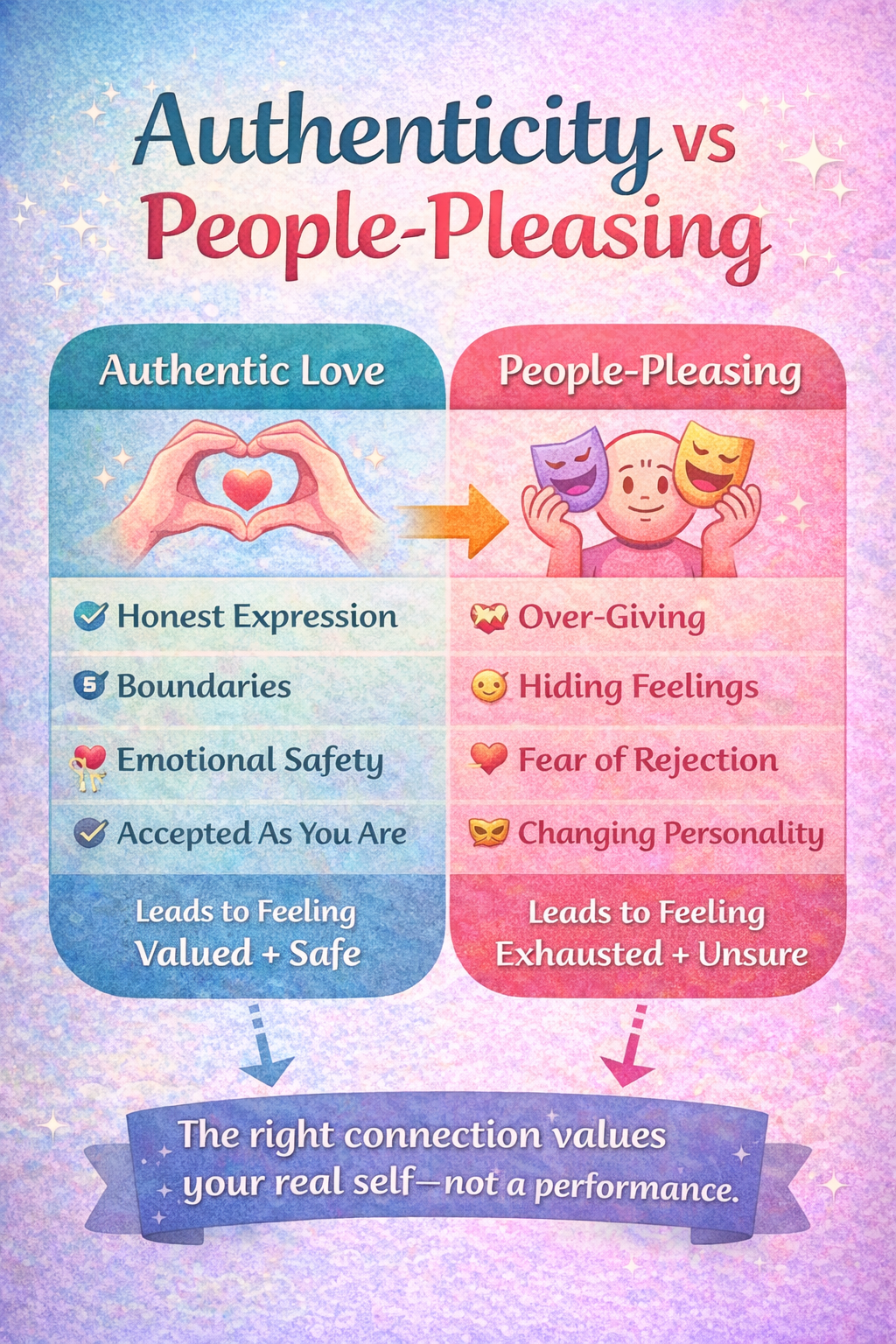
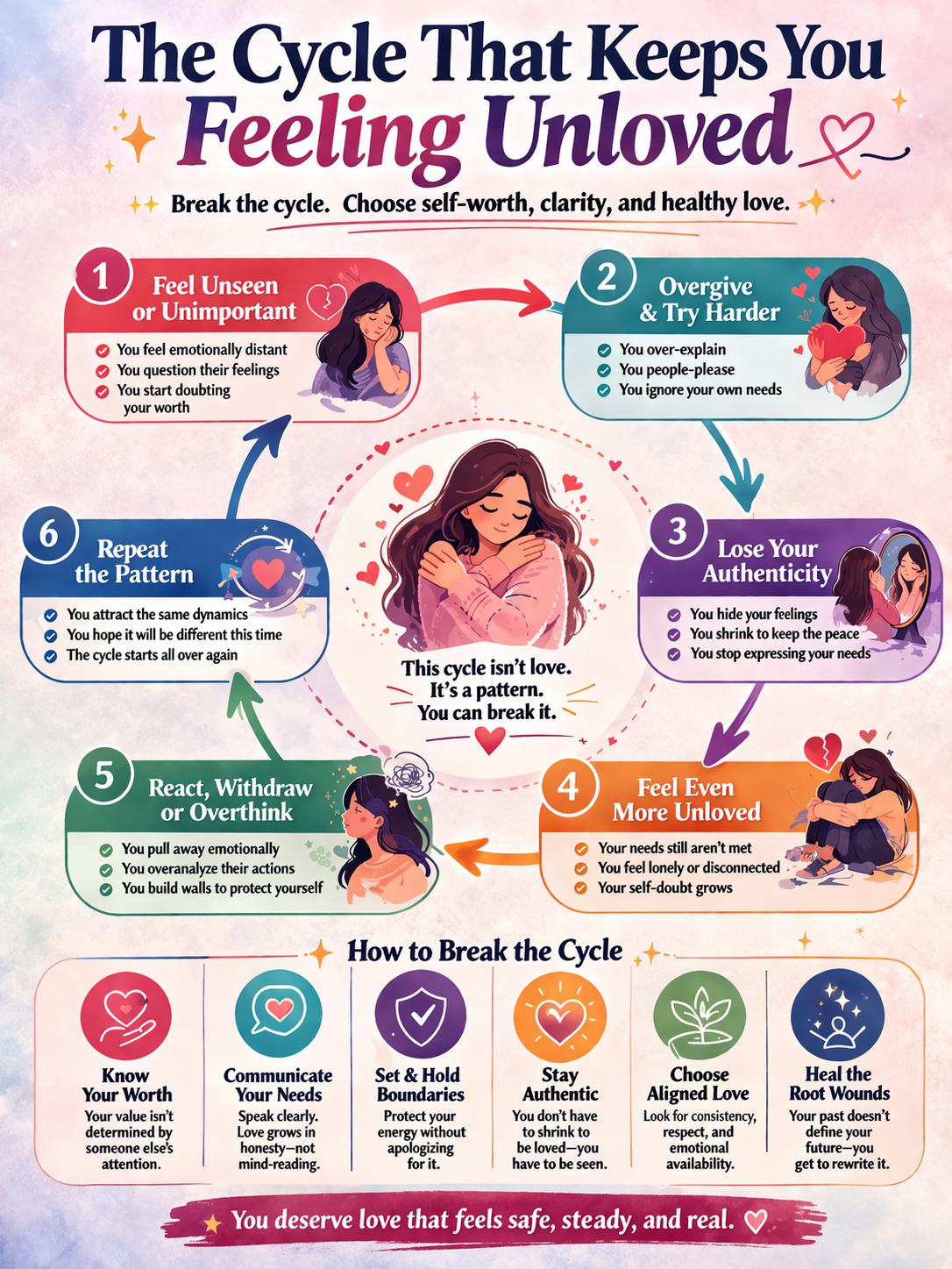
Wanting love can quietly turn into people-pleasing. You edit an opinion, stop asking for what you need, become “easy,” or make yourself smaller because losing the relationship feels scarier than losing parts of yourself. Healthy connection asks for flexibility, but it should not require self-erasure.
Feeling Loved Should Not Require Performing
Every relationship involves adaptation. Partners compromise, learn each other’s preferences and sometimes change habits because they care. That is different from repeatedly suppressing your identity, values, boundaries or needs to keep someone interested.
A useful question is: Am I adjusting a behavior, or am I abandoning myself? Healthy flexibility can still feel like you. Self-abandonment usually leaves you anxious, resentful, invisible or unsure what you actually want.
What Does Healthy Love Feel Like?
No relationship feels secure every moment, but healthier love usually includes recognizable patterns:
- You can express preferences without being mocked.
- You can say no without punishment or retaliation.
- Your partner is interested in who you are, not only what you provide.
- Disagreement does not automatically threaten the relationship.
- Care is visible in actions as well as words.
- Both people can have separate interests and relationships.
- You are not constantly monitoring yourself to avoid abandonment.
For a broader relationship-health checklist, see 15 Qualities That Create a Strong and Lasting Relationship.
Love Still Needs Evidence
Feelings matter, but healthy relationships also have observable behavior. Reliability, honesty, respect, follow-through and willingness to repair conflict are useful evidence of how a relationship functions. It is not healthy to dismiss repeated harmful behavior simply because a connection feels intense or “meant to be.”
At the same time, some people struggle to register care even when it is present. Past experiences can affect expectations around closeness, rejection and trust. That does not mean someone is incapable of love; it means self-reflection or professional support may sometimes help separate present reality from older fears.
The Difference Between Compromise and Self-Abandonment
Compromise has mutuality. Both people adjust. Both people matter. Self-abandonment is more one-sided: you repeatedly ignore your limits so the other person never has to be uncomfortable.
- Both voices matter.
- Needs are discussed.
- Boundaries remain intact.
- Changes are voluntary.
- You hide important needs.
- You fear disagreement.
- You accept repeated disrespect.
- You perform to keep approval.
Relief Is Not the Same as Love
When anxiety is high, reassurance can create a powerful sense of relief. A reply arrives, a conflict ends, or someone finally says what you hoped to hear. Relief is real, but it is temporary regulation—not proof that the overall relationship is healthy.
Look beyond the emotional high. Does the relationship become more secure over time, or do you repeatedly cycle between panic and reassurance?
Healthy Love Needs Boundaries
“Love has no boundaries” sounds romantic, but healthy relationships do have boundaries. Boundaries protect consent, privacy, time, physical safety, emotional limits and individuality. A partner who cares about you should be able to hear a reasonable boundary without treating it as rejection.
Boundaries do not guarantee that every relationship will continue. Sometimes a clear boundary reveals incompatibility. That can be painful, but it is more honest than preserving a connection by pretending your limits do not exist.
Consistency Often Matters More Than Intensity
Intense attention can feel compelling, especially early in a relationship. But long-term trust is usually built through less dramatic things: showing up, keeping promises, respecting limits, communicating after conflict and behaving consistently when there is nothing to “win.”
Calm does not automatically mean boring or loveless. For many people, learning to tolerate steadier connection is part of moving away from relationship patterns driven by uncertainty.
Authenticity Does Not Mean Saying Everything
Being yourself is not the same as having no filter. Healthy authenticity includes judgment, timing and respect. You can pace vulnerability while still being honest about your values, needs and personality.
The goal is not radical disclosure. The goal is being recognizable to yourself inside the relationship.
Expand Where Love Comes From
Romantic love is only one form of connection. Friendship, family, community and chosen family can all contribute to belonging and emotional support. Depending on one romantic partner to provide every form of validation can put enormous pressure on both people.
A wider support system also makes it easier to make relationship choices from values rather than fear of being completely alone.
Use Intuition as a Signal, Not Proof
People often describe intuition as a sense that something feels right or wrong before they can fully explain why. That feeling can be worth noticing, but it is not evidence of another person’s secret motives. Treat intuition as a prompt to ask questions, check facts and pay attention to patterns—not as confirmation that a suspicion is true.
The same applies to psychic or spiritual readings. They can be used as reflective tools if that is meaningful to you, but they cannot verify another person’s private thoughts or guarantee a relationship outcome. See our Psychic & Spiritual Claims Policy.
How to Rebuild Self-Trust in Love
- Name preferences without apologizing for having them.
- Notice when you say yes but internally mean no.
- Keep friendships and interests that matter to you.
- Ask for what you need directly instead of testing whether someone will guess.
- Pay attention to repeated behavior, not only promises.
- Use journaling, therapy or reflection to understand recurring patterns.
- Allow a relationship to reveal incompatibility instead of reshaping yourself to prevent it.
When Changing Yourself Is a Warning Sign
Some changes are healthy growth. Others are signs that the relationship may be unsafe or controlling. Pay attention if you are pressured to isolate from friends, change your appearance against your wishes, surrender privacy, tolerate humiliation, give up money or work, accept sexual pressure, or constantly prove loyalty.
If fear, threats, coercion or abuse are present, the priority is safety—not becoming better at accommodating the relationship.
A Better Goal Than “Be More Lovable”
Ask whether the relationship gives both people enough room to be honest, respected and emotionally safe. You do not need universal approval. You need relationships where compromise does not require disappearing.
Related Guides
- 15 Qualities of a Strong Relationship
- When “I’m Fine” Creates Communication Confusion
- Toxic Relationships & Boundaries
- Self-Love & Emotional Growth
Frequently Asked Questions
1. How can I feel loved without changing who I am?
Stay honest about your values, needs and boundaries while allowing normal compromise. Healthy connection should not require hiding important parts of yourself.
2. Is changing for a partner always unhealthy?
No. People often make healthy changes in relationships. The concern is whether change is voluntary, mutual and aligned with your values rather than driven by fear.
3. What is self-abandonment in a relationship?
It is repeatedly ignoring your needs, limits or identity to preserve connection or approval.
4. What is the difference between compromise and people-pleasing?
Compromise considers both people. People-pleasing often prioritizes avoiding rejection even when doing so consistently harms your own needs.
5. Does real love need proof?
Healthy love is not reducible to one piece of proof, but observable patterns such as respect, honesty, reliability and repair still matter.
6. Why might I feel unloved even when someone cares?
Past relationship experiences, fear of rejection, low self-worth or current communication problems can affect how care is interpreted.
7. Why are boundaries important in love?
Boundaries protect consent, safety, privacy and individuality. They help both people understand what is and is not acceptable.
8. Is intensity a sign of true love?
Not by itself. Intensity can feel powerful, but consistency and respectful behavior over time are better indicators of relationship stability.
9. Can I be authentic without oversharing?
Yes. Authenticity means being honest about who you are while still using judgment about timing, privacy and emotional safety.
10. How can I stop people-pleasing in relationships?
Practice small acts of honesty: express preferences, pause before automatically saying yes, maintain outside relationships and notice when fear drives your choices.
11. What if my partner dislikes my boundaries?
A partner may not like every boundary, but healthy discussion should still be possible. Retaliation, intimidation or repeated violations are concerning.
12. Can intuition tell me whether someone truly loves me?
Intuition can prompt reflection, but it cannot verify another person’s private thoughts. Use direct communication and observable behavior for factual decisions.
13. Can a psychic reading confirm whether a relationship is meant to be?
No reading can guarantee a relationship outcome. Spiritual guidance is better treated as reflective input than as factual proof.
14. What are signs I am losing myself in a relationship?
Common signs include abandoning friendships, hiding opinions, ignoring boundaries, changing goals only to avoid conflict and feeling unsure who you are outside the relationship.
15. When should I seek professional support?
Support may be useful when fear of abandonment controls your choices, unhealthy patterns keep repeating or the relationship includes coercion, intimidation or abuse.