


Marriage & Intimacy Guide
A marriage with little or no sexual activity is not automatically broken, and there is no single amount of sex that defines a healthy relationship. The important questions are whether both partners are comfortable with the current level of intimacy, whether either person feels distressed or pressured, and whether there are physical, emotional or relationship factors that need attention.
What Does “Sexless Marriage” Mean?
“Sexless marriage” is an informal description rather than a diagnosis. Some people use it when sex becomes very infrequent; others use it when sexual intimacy has stopped for a long period and at least one partner is unhappy about the change. A low-sex relationship may be completely acceptable when both partners genuinely agree that it works for them.
The problem is not a number. The problem is distress, disconnection, pressure, resentment or an inability to talk honestly about what is happening.
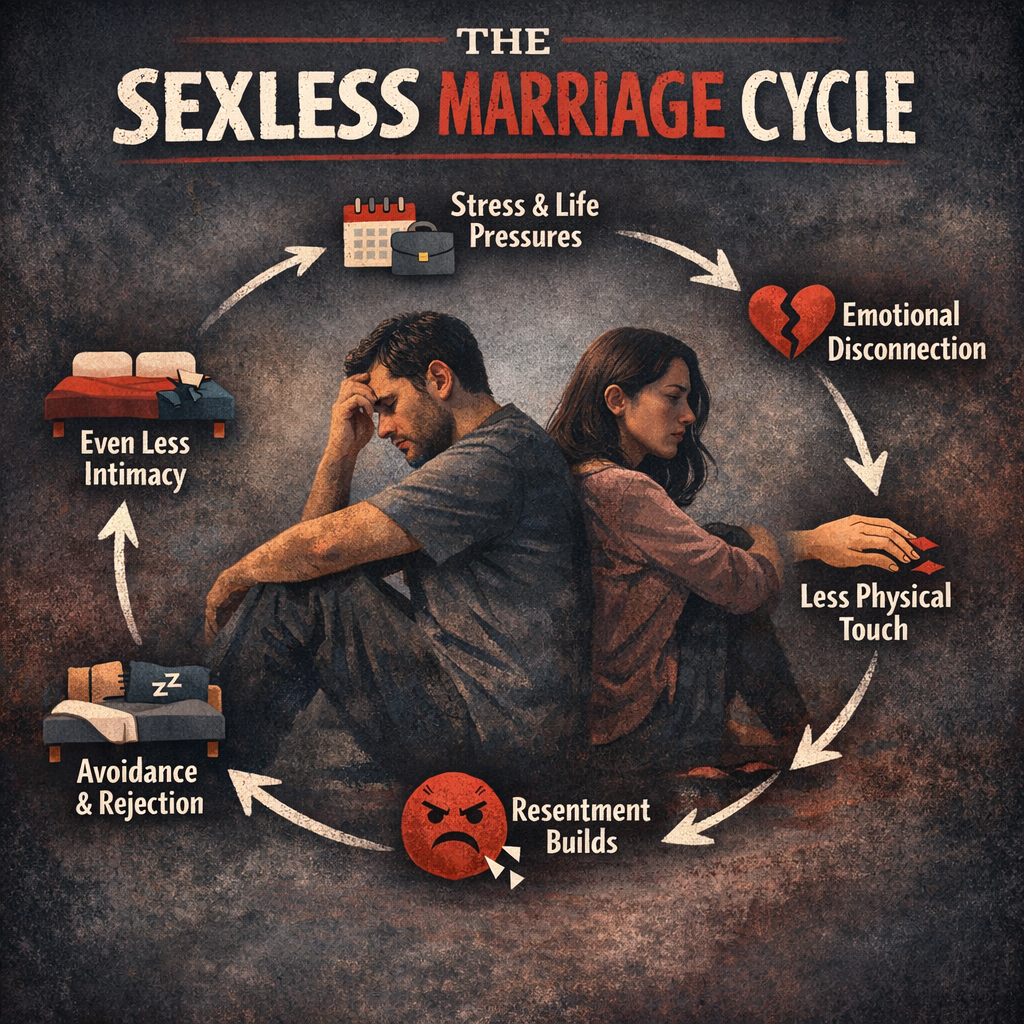
Common Reasons Intimacy Changes
Desire and sexual comfort can change for many reasons, and more than one factor may be involved at the same time:
- Stress, exhaustion or parenting demands.
- Relationship conflict or unresolved resentment.
- Different levels of sexual desire.
- Pain, illness, disability or recovery from medical treatment.
- Medication side effects or hormonal changes.
- Depression, anxiety, trauma or other mental-health factors.
- Pregnancy, postpartum changes or menopause.
- Changes in attraction, identity or expectations.
- Fear that affectionate touch will automatically create pressure for sex.
Because physical and psychological factors can overlap, persistent pain, sudden changes in sexual function or concerns about medication are reasons to speak with an appropriate licensed healthcare professional rather than trying to diagnose the cause from relationship advice alone.
Can a Sexless Marriage Be Saved?
Sometimes, yes. Other times, the couple may discover that the mismatch is not something both people want or are able to resolve. There is no honest guarantee. Improvement is more likely when both partners are willing to discuss the issue without coercion, understand the causes, respect consent and make realistic changes together.
A relationship cannot be repaired by pressuring one partner into sex. The goal is mutual closeness and choice—not meeting a quota.
Reconnection Ladder
Build Closeness From the Bottom Up
No pressure, threats or scorekeeping.
Talk about what changed and what each person needs.
Rebuild welcome, non-demand touch.
Explore sexual connection only when mutually wanted.
Step 1: Talk About the Change Without Blame
Choose a calm time rather than raising the issue immediately after rejection or during an argument. Start with your experience: “I miss feeling close to you and I want to understand what this has been like for you.” That is more likely to invite honesty than “You never want me.”
Ask about comfort, stress, health, emotional connection, expectations and what kind of intimacy currently feels welcome. Listening is part of the conversation; the goal is not to persuade a partner into giving the answer you want.
Step 2: Separate Affection From Obligation
When every hug is interpreted as the beginning of sex, a lower-desire partner may start avoiding all touch. Couples can sometimes reduce that anxiety by agreeing that certain forms of affection—holding hands, sitting close, cuddling or a longer hug—do not have to lead anywhere else.
That agreement needs to be genuine. If one partner repeatedly uses “non-sexual” touch as a hidden route to sex, trust will usually decline.
Step 3: Rebuild Emotional Connection
Sexual desire is not always caused by emotional closeness, but relationship tension can affect intimacy. Reconnection may include protected time together, appreciation, resolving practical resentments, sharing responsibilities more fairly and talking about more than logistics.
For broader habits that support connection, see 15 Qualities That Create a Strong and Lasting Relationship.
Step 4: Discuss Desire Differences Directly
A desire mismatch does not automatically mean either person is wrong. One partner should not have to suppress every sexual need indefinitely, and the other should not have to consent to unwanted sex. The real task is discovering whether there is a mutually acceptable way forward.
Useful questions include:
- What kinds of closeness feel good right now?
- What creates pressure or shuts desire down?
- Are there times when desire is more available?
- What would help each person feel wanted without feeling obligated?
- What changes outside the bedroom might reduce stress or resentment?
Step 5: Consider Planned Connection, Not Mandatory Sex
Some couples find it helpful to schedule private time because work and family life otherwise consume every opening. The schedule can be for connection rather than a guaranteed sexual act. That distinction keeps consent active and reduces the feeling that one partner owes the other a specific outcome.
Step 6: Address Medical or Psychological Factors Appropriately
If there is pain, a sudden loss of desire, erectile difficulty, medication concerns, symptoms related to menopause or postpartum changes, or significant depression or anxiety, licensed medical or mental-health care may be relevant. Couples or sex therapy may also help when the issue has become emotionally loaded or conversations repeatedly break down.
Relationship articles can offer questions and communication ideas, but they cannot diagnose sexual-health concerns.
What Usually Makes the Problem Worse?
- Pressure, guilt or threats.
- Keeping score of who initiates or rejects.
- Assuming lack of sex proves lack of love.
- Using affairs or ultimatums as leverage.
- Mocking a partner’s body, desire or sexual functioning.
- Avoiding the subject for months while resentment grows.
- Treating a psychic reading as proof of why a partner does or does not want sex.
What If Only One Partner Wants to Work on It?
One person can improve how they communicate, but a two-person sexual relationship cannot be repaired by one person alone. If one partner refuses every conversation or compromise, the question may shift from “How do we restore sex?” to “Is this relationship still meeting both people’s basic needs and values?”
If staying in the relationship requires you to erase your needs or identity, How to Feel Loved Without Changing Who You Are may also be useful.
Consent Is Not a Relationship Repair Tool—It Is a Requirement
No partner owes sex to preserve a marriage. Rebuilding intimacy should involve freely given consent, respect for boundaries and the ability to stop or change direction without punishment. If there is coercion, sexual violence, threats or fear, prioritize safety and appropriate professional support rather than intimacy exercises.
Related Guides
- 15 Qualities of a Strong Relationship
- How to Feel Loved Without Changing Who You Are
- Intimacy & Sexual Connection Articles
- Marriage & Long-Term Relationship Guides
Frequently Asked Questions
1. Can a sexless marriage be saved?
Some can improve when both partners want to understand the causes, communicate honestly and rebuild closeness without pressure. There is no guarantee for every marriage.
2. What counts as a sexless marriage?
There is no universal cutoff. The phrase is usually used when sexual intimacy is very infrequent or absent and at least one partner is concerned about it.
3. Is a low-sex marriage always unhealthy?
No. If both partners are genuinely comfortable with their level of sexual activity and still feel connected, low frequency alone does not make the relationship unhealthy.
4. What causes sex to disappear from a marriage?
Possible factors include stress, exhaustion, health changes, medication, pain, mismatched desire, unresolved conflict, trauma, parenting demands or changes in attraction.
5. Does no sex mean my partner no longer loves me?
Not necessarily. Sexual desire and love are related for some people but are not identical. Ask about the change rather than assuming its meaning.
6. Can mismatched libido be managed?
Sometimes. It requires honest discussion, respect for consent and a mutually acceptable approach rather than treating one person’s desire level as defective.
7. Should we schedule sex?
Some couples find planned connection useful, but scheduling should not turn sex into an obligation. It can be better to schedule private time while keeping the outcome flexible.
8. Can non-sexual touch help?
Yes, when both people want it. Affection without an expectation of sex can help rebuild comfort and warmth after a period of avoidance.
9. What if physical touch always feels like pressure?
Discuss clear boundaries around touch so both partners know which forms of affection are welcome and whether they are expected to lead further.
10. Can health problems affect sexual desire?
Yes. Pain, illness, hormonal changes, medication and mental-health conditions can affect desire or sexual functioning. A licensed healthcare professional can evaluate medical concerns.
11. When should couples consider therapy?
Therapy may help when conversations repeatedly become hostile or hopeless, resentment is entrenched, trust has been damaged or sexual issues feel too difficult to discuss alone.
12. Is sex therapy different from couples therapy?
Sex therapy focuses specifically on sexual concerns while often considering relationship dynamics too. Credentials and scope vary, so verify a professional’s licensing and training.
13. What if only one partner wants more sex?
Neither partner should be coerced. The couple needs to decide whether there is a compromise that respects both people or whether the mismatch creates a larger compatibility issue.
14. Can a psychic reading explain why my partner avoids sex?
A psychic reading cannot verify another person’s private motives or diagnose health issues. Direct conversation and qualified professional care are more reliable for factual questions.
15. What is the best first step?
Start with a calm conversation about what has changed, what each person is experiencing and whether both partners want to work on rebuilding connection.