

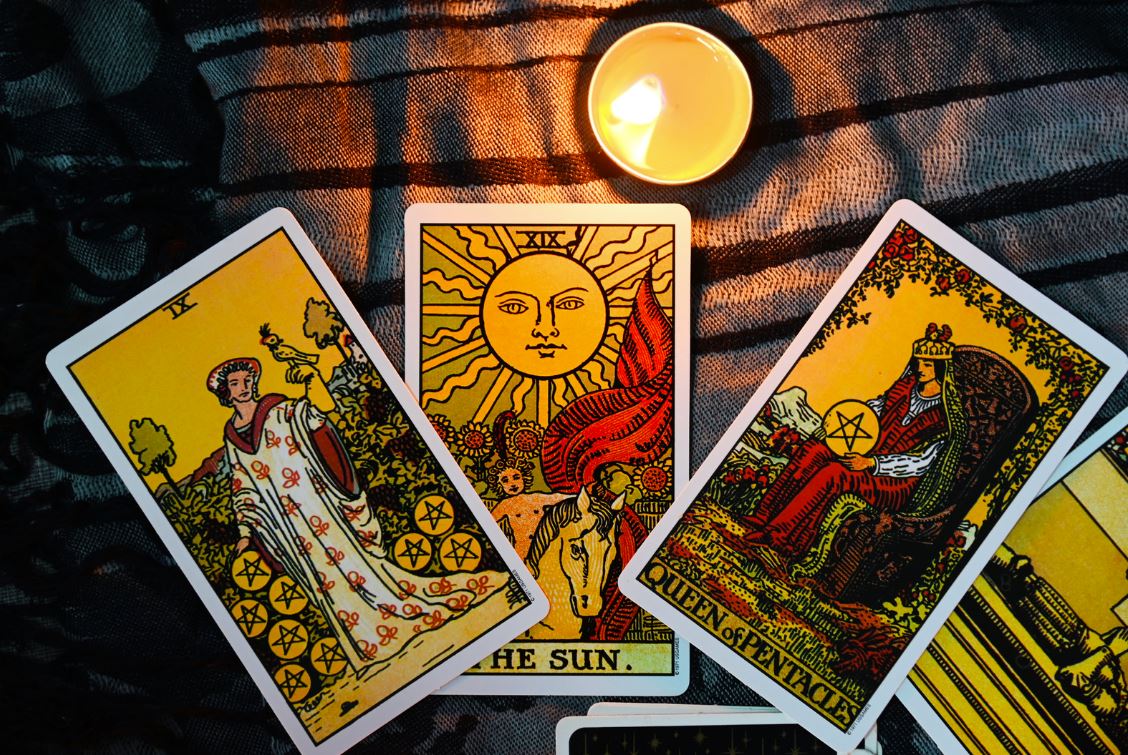
Tarot as Reflection
Older versions of this article used a first-person tarot-reading story. Because that personal session is not independently documented as the current author’s experience, this guide now uses a generalized case example instead. The goal is to show how tarot symbolism can prompt reflection without presenting a reader’s prediction as verified fact.
A Simple Tarot Case Example
Imagine a person gets a love-focused tarot reading because they keep overanalyzing relationships. The reader draws cards associated with emotion, self-knowledge, hope and change. Instead of treating the cards as a fixed forecast, the client uses them to ask better questions about patterns and needs.
What the “Indicator” Card Can Do
A card chosen to represent the client can act as a mirror for a theme: emotional distance, confidence, fear, openness or another idea. The useful part is not proving that the card objectively describes the person; it is noticing whether the interpretation sparks a relevant thought.
A symbolic image or theme.
What does this bring up for me?
What practical choice follows?
Past, Present and Future Cards
Tarot spreads often use positions called past, present and future. A future position should be treated as a possible theme or scenario, not a guaranteed event. Your choices and other people’s choices remain uncertain.
Love Cards Do Not Prove Someone Loves You
Cards such as The Lovers or Two of Cups can symbolize connection, values or relationship choices. They cannot independently verify another person’s private feelings.
Outcome Cards Are Not Contracts
An outcome card may help you imagine where a current pattern could lead. Use it to ask, “If I continue this way, what might I need to consider?” rather than “This will definitely happen.”
Why a Reading Can Still Feel Powerful
Symbolic systems can organize thoughts in a new way. A reader’s questions, the ritual of the session and your own associations can make emotions easier to name.
What a Responsible Tarot Reading Avoids
- Guaranteed marriage, breakup or pregnancy predictions.
- Claims to prove cheating or private thoughts.
- Pressure to buy repeated readings or spiritual remedies.
- Replacing medical, legal, financial or mental-health help.
- Using fear to keep you dependent.
A Better Way to Use Love Tarot
If you enjoy comparing symbolic systems, the I Ching (Book of Changes) is another historic divination tradition with a very different structure and history.
- Choose one relationship question.
- Ask about your own choices rather than another person’s mind.
- Write down the card themes.
- Separate symbolism from observable facts.
- Choose one practical next step.
Example Questions
- What pattern do I keep repeating in dating?
- What boundary am I avoiding?
- What am I hoping this relationship will fix for me?
- What conversation do I need to have directly?
- What option am I overlooking?
Tarot Can Build a Story Without Predicting Your Life
Use the cards to explore perspective, then return to communication, evidence and your own choices.
Related Guides
- Using Tarot to Help Find Love
- Twin Flame Tarot
- How to Know How Someone Feels
- Love Astrology, Tarot & Numerology
Frequently Asked Questions
1. Can tarot predict my love future?
Tarot can offer symbolic possibilities, not guaranteed future facts.
2. Can tarot tell if someone loves me?
It cannot independently verify another person’s private feelings.
3. What does The Lovers card mean?
Common themes include connection, values, attraction and important choices.
4. Is an outcome card guaranteed?
No.
5. Can tarot prove cheating?
No.
6. Can tarot predict marriage?
No marriage outcome should be treated as certain.
7. Is tarot useful without prediction?
Yes, many people use it for reflection and journaling.
8. Should I ask about another person’s thoughts?
Questions about your own choices and boundaries are more grounded.
9. Can I read tarot for myself?
Yes, if you enjoy the practice.
10. What if a reading scares me?
Remember that symbolic interpretations are not fixed outcomes.
11. Should I book another reading immediately?
Usually it is better to reflect on the first one before seeking reassurance.
12. Can tarot replace therapy?
No.
13. Can tarot diagnose mental health?
No.
14. What is a good love-tarot question?
Ask what relationship pattern, boundary or choice deserves attention.
15. What makes tarot most useful?
Turning symbolism into thoughtful questions and practical action.